Tree removal after an ivy removal call
A request for ivy removal brought us to this home in Fredericksburg. The visit led to an arborist assessment and tree removal beside the house.
Certified Arborist-led · Insured · 30+ years of tree-industry experience
How the concern was identified
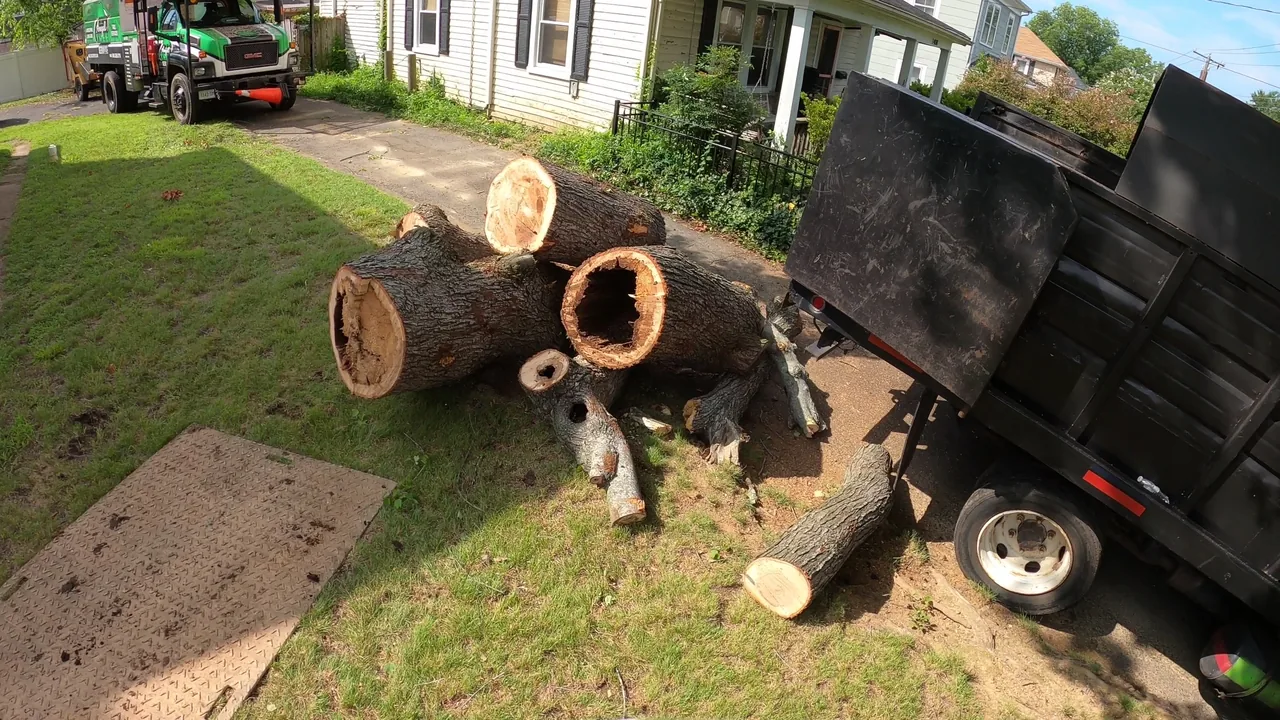
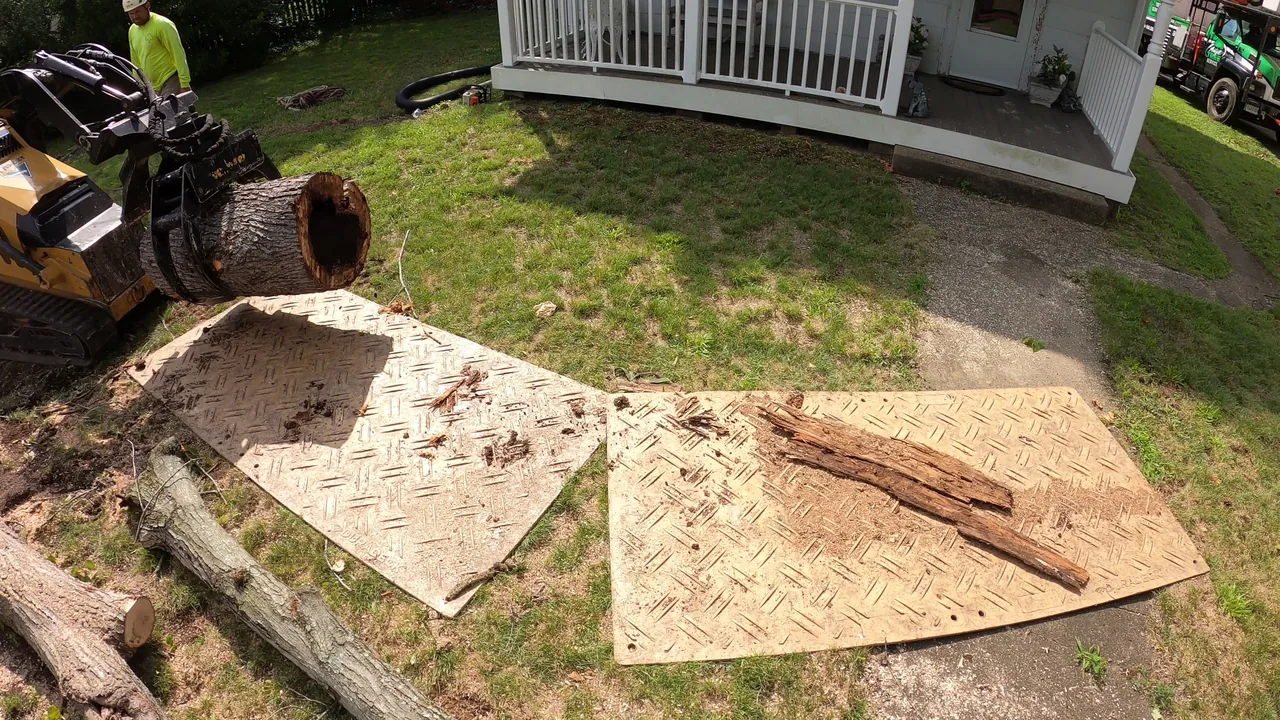
During the ivy-removal visit, our arborist noticed visible holes and rot in the tree. Those signs raised concerns about internal decay. The cut sections photographed during removal later showed large hollow cavities.
Why hollowing near a home matters
A hollow can indicate internal decay, which can reduce the strength of a trunk or major branch. When a tree is beside a house or porch, a failure could damage the building or injure someone nearby. The level of risk depends on the decay’s extent and location, the remaining sound wood, and the tree’s structure and surroundings. An on-site arborist assessment is needed to judge those factors.
Signs that warrant an inspection
- Open holes or cavities in the trunk or major branches.
- Exposed wood that is visibly rotten or crumbling.
- Fungal growth on the trunk or near the base.
- Cracks, seams or unusual swelling around damaged wood.
Tree-risk background: ISA Recognizing Tree Risk · USDA Forest Service guidance on tree decay
Taking the tree down in sections
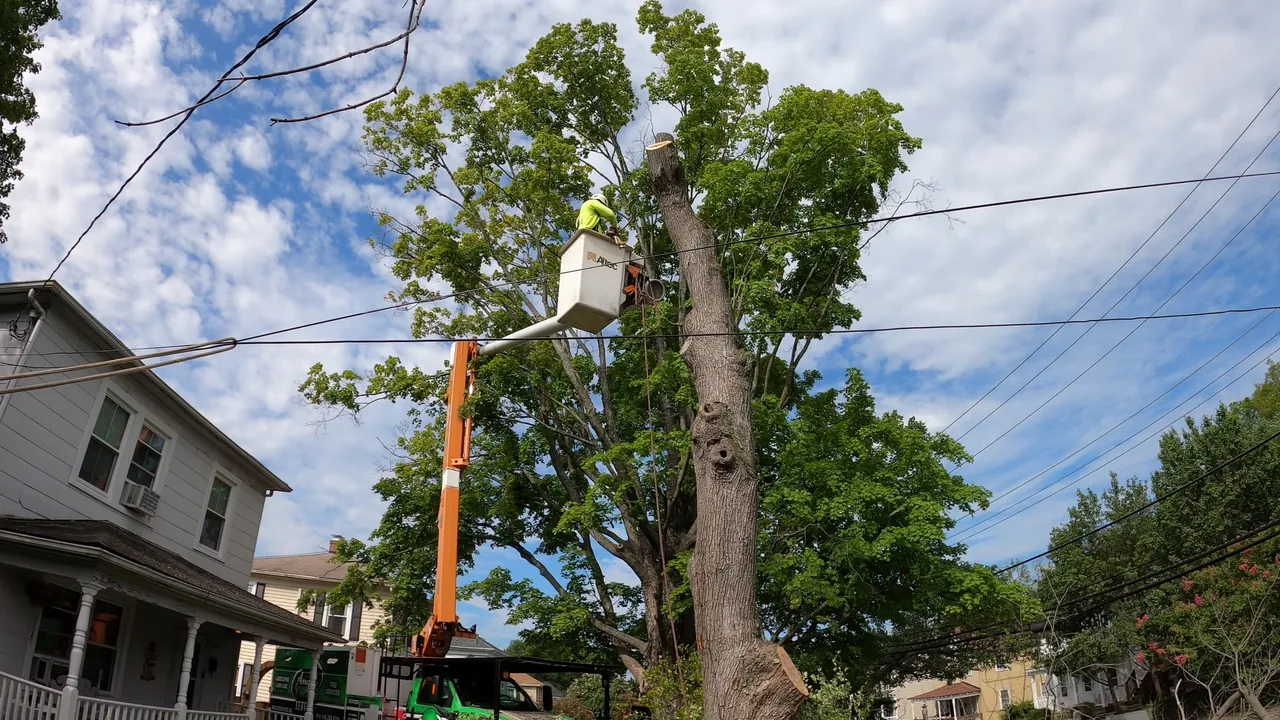
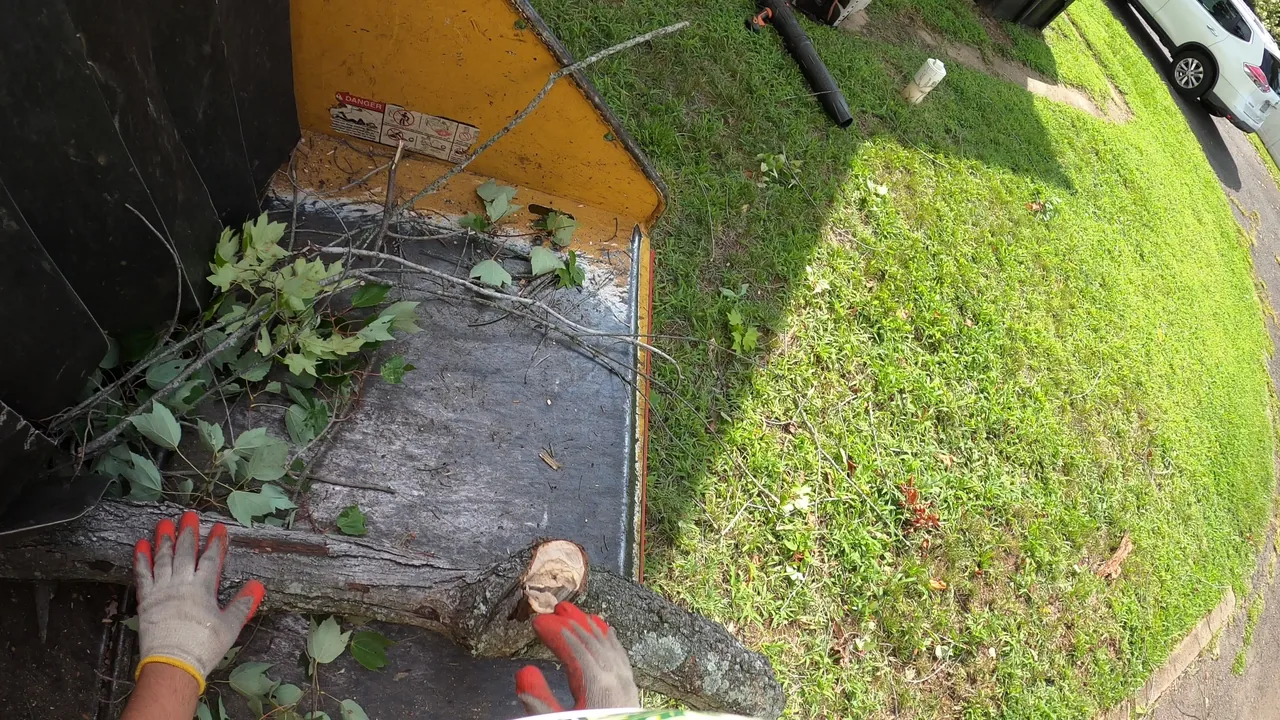
Working beside the house and front porch, our crew used a bucket truck to reach the upper portions of the tree and remove it in sections. Ground crew members chipped branches, while a compact loader moved larger wood across laid boards and into a dump bed.
Cleanup after removal
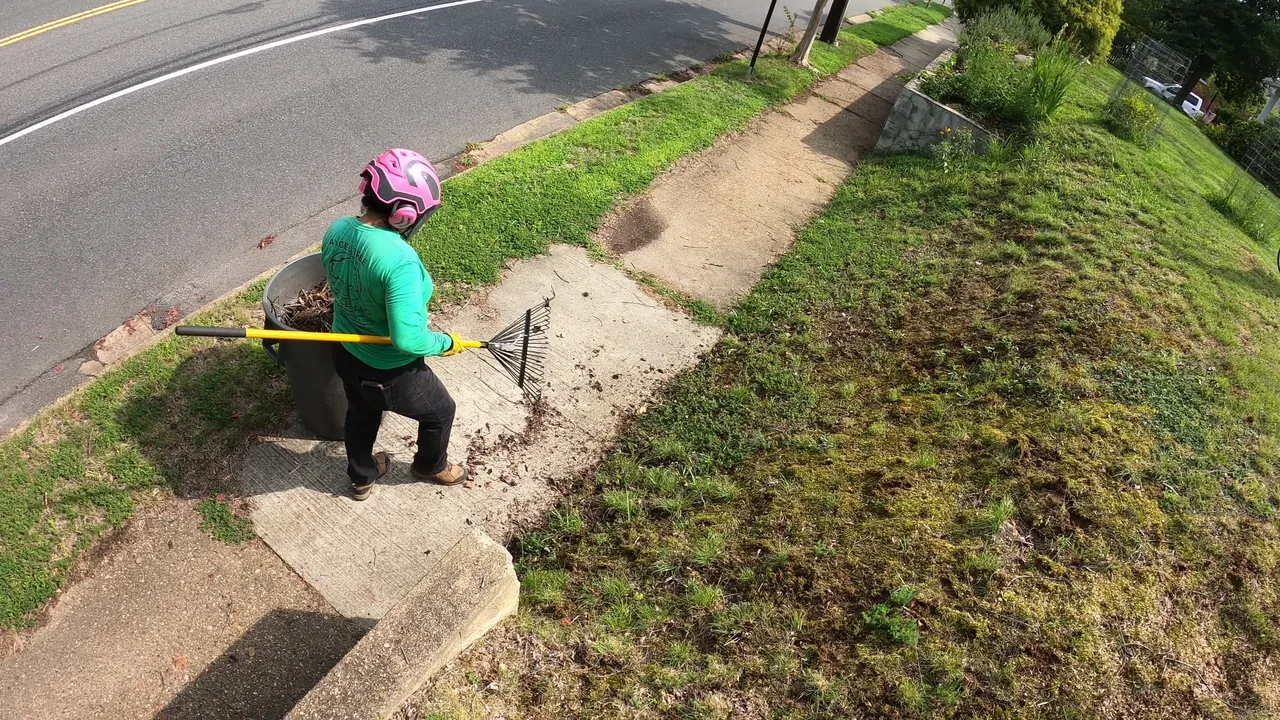
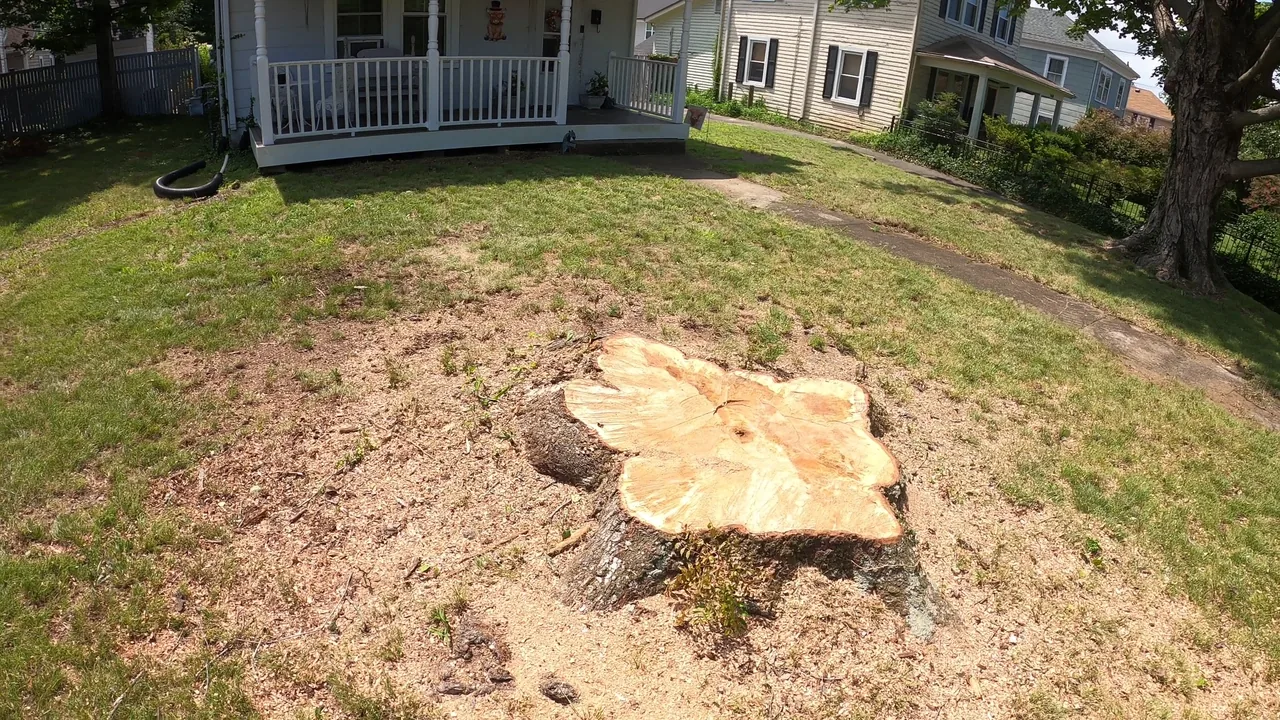
Once the larger material had been handled, our crew raked and collected smaller debris from the yard and sidewalk. The customer was happy with the finished work.
Have a tree you are concerned about?
Tell us what you have noticed and where the tree is located. We will follow up about an on-site assessment and estimate.
Certified Arborist-led · Insured · 30+ years of tree-industry experience